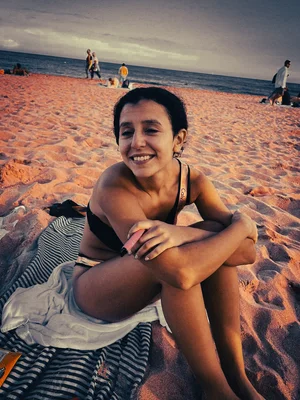
Tangier to Chefchaouen: Morocco Beyond Marrakesh
A northern Morocco route through Tangier, the city of two seas, childhood memories, Hercules Cave, ferries to Spain and the road to Chefchaouen.
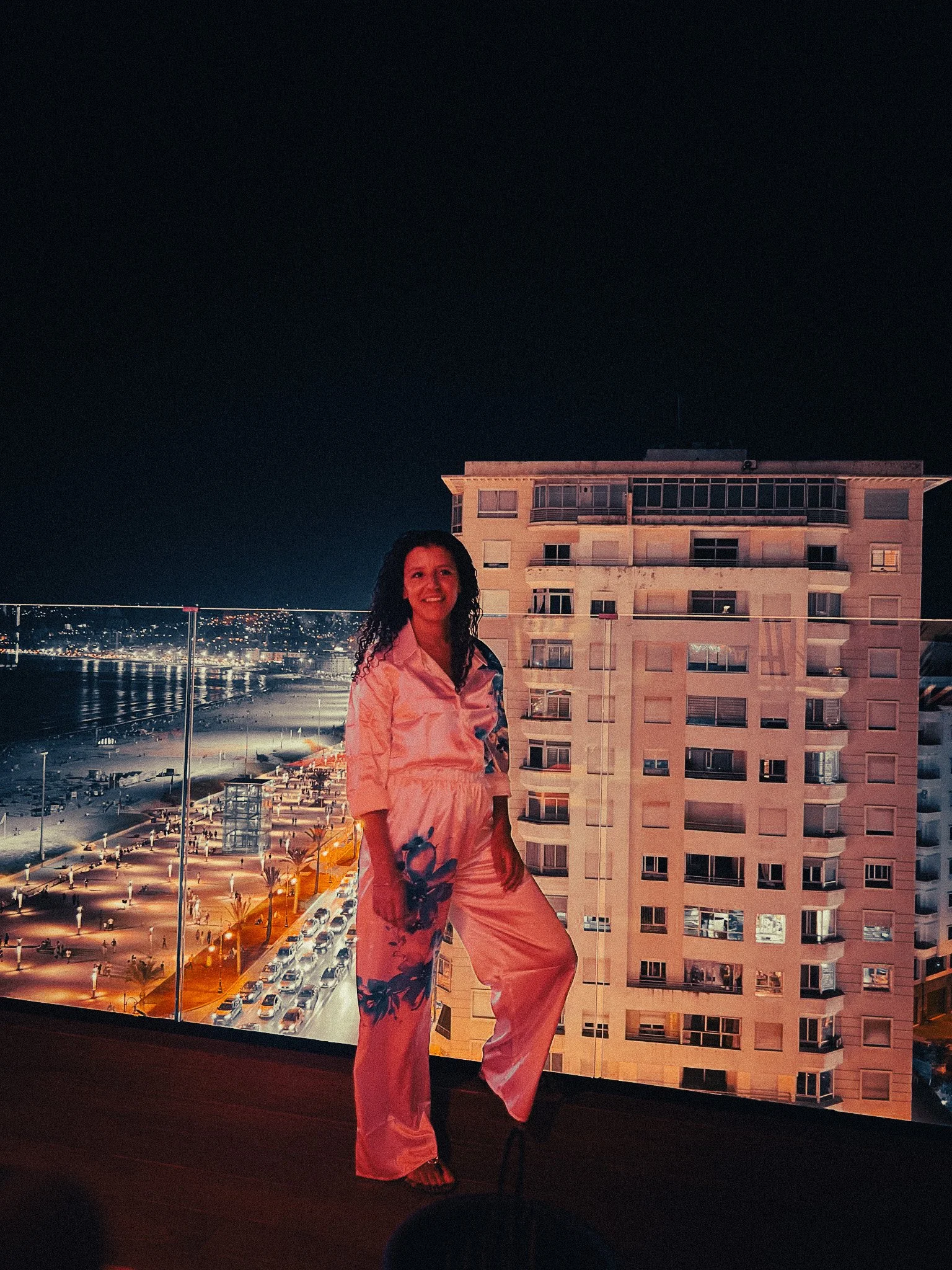
Tangier at night, the city I miss most: sea lights, old memories, and the place in Morocco where I feel most at peace.
There are places you visit, and then there are places that live under your skin no matter how far you go. For me, Tangier is not just a city in northern Morocco. It is childhood, sea wind, family routes, old memories, the smell of salt and dust, the sound of people speaking too loudly because silence was never really our national talent. It is the only place where something inside me softens. I have travelled to deserts, jungles, ruins and islands, but Tangier is different. Tangier does not impress me like a tourist. Tangier recognises me.
Most people come to Morocco and run straight to Marrakesh, as if the whole country is one red city, one riad courtyard and one man selling lamps with suspicious confidence. Marrakesh is beautiful, yes, but Morocco is not just Marrakesh. Morocco is also the north: Tangier, the sea, the wind, the road to Chefchaouen, the mountains, the ferries crossing to Spain, the old stories, the places where Africa looks at Europe across the water and still refuses to become anything other than itself.
Tangier is where I would start if you want a Morocco that feels layered, coastal, strange, nostalgic and alive. It is a city of thresholds. It sits between the Atlantic Ocean and the Mediterranean Sea, between Morocco and Spain, between Africa and Europe, between myth and ordinary life. From here, the route to Chefchaouen becomes more than just a journey to the famous blue city. It becomes a northern Morocco route through memory, mountain roads and a completely different Morocco from the one people keep repeating online like they were personally sponsored by Marrakesh.
Why Tangier Is the Morocco Most People Miss
Tangier is not polished in the way some travellers expect. It is not always soft, curated or easy to summarise. That is exactly why I love it. It has always felt like a city with one foot on land and one foot already leaving. The port, the ferries, the sea, the hills, the cafés, the old medina, the mix of languages, the Spanish influence, the Moroccan soul underneath all of it. Tangier feels like movement, but also like waiting. A city of arrivals and departures, which is probably why it stays in the heart so strangely.
When I think of Tangier, I do not think first of tourist attractions. I think of the feeling of being close to the sea, of knowing Spain is just across the water, of roads that have carried families, traders, travellers, dreamers and people running from one life into another. As a child, I did the route from Tangier to Chefchaouen more than once, and those memories stayed with me in a way clean itineraries never do. Mountains outside the window, family voices, the feeling of going somewhere quieter, bluer, higher. Childhood makes geography emotional. A map is never just a map when you have lived inside it.
For travellers, Tangier is useful because it works as a starting point. You can arrive through Tangier airport, come by ferry from Spain, or build it into a northern Morocco itinerary before moving towards Chefchaouen, Tetouan, Asilah, Rabat or even further south. But usefulness is not the only reason to come. Tangier has atmosphere. It has that old coastal restlessness. It is a city that does not beg to be liked, which naturally makes it more interesting than half the places trying desperately to become Instagram backgrounds.
Tangier, the City of Two Seas
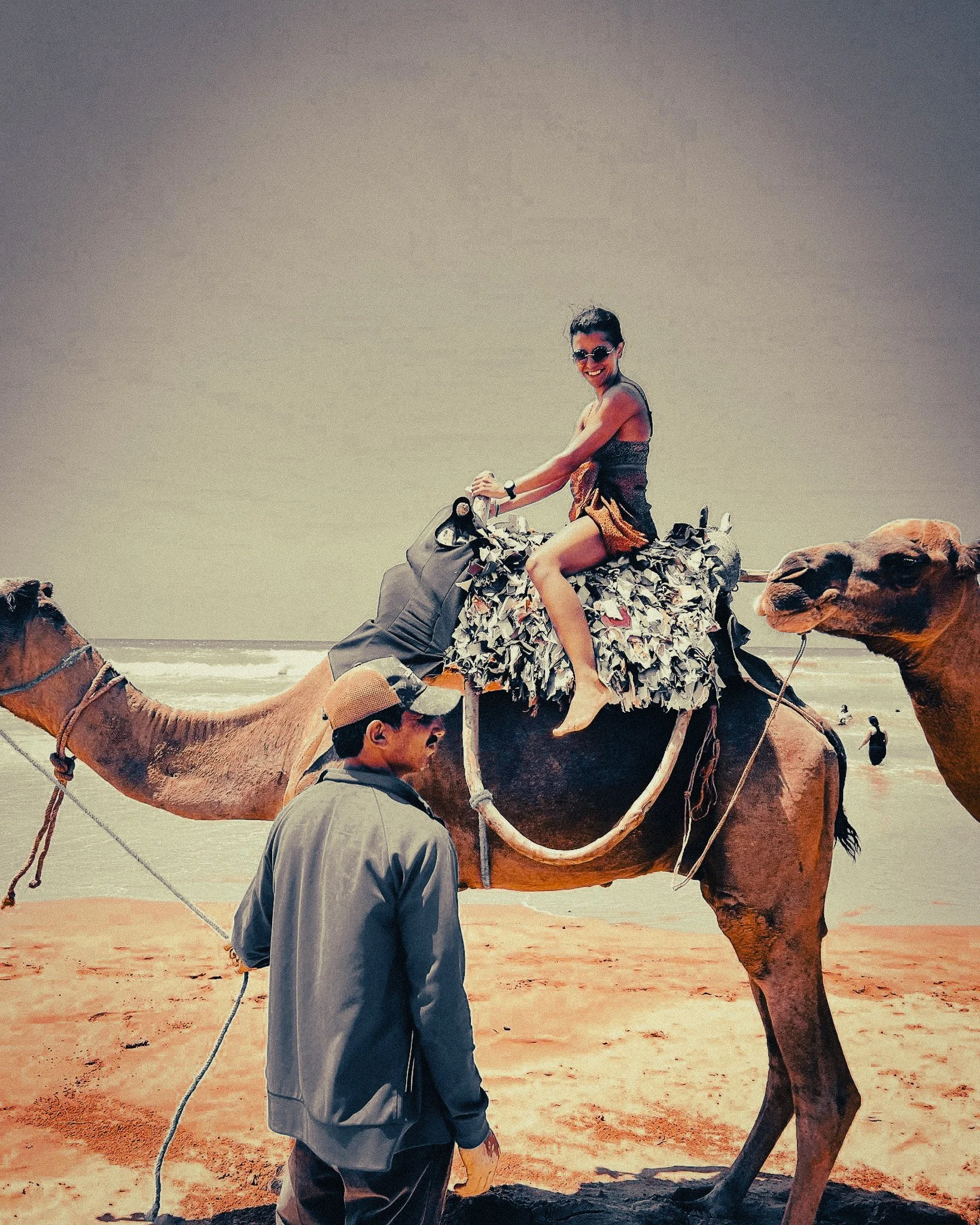
Tangier belongs to the sea, but also to childhood memories like this: camels on the beach, salt air, family days, and the strange peace of being home.
Tangier belongs to the water. That is the first thing to understand. It is shaped by it. To the west, the Atlantic pulls the city towards openness and distance. To the east, the Mediterranean carries that older, warmer feeling of crossings, empires, families, trade, food, language and summer evenings. Near Cap Spartel, the two waters meet, and even if the meeting is not as dramatic as people sometimes imagine, the idea of it is powerful enough. Two seas touching near the city of your childhood. Obviously I was going to romanticise it.
This is one of the reasons Tangier feels different from other Moroccan cities. It has an edge-of-the-world feeling. You are in Morocco, but you can feel Spain nearby. You are in Africa, but Europe is visible across the Strait of Gibraltar. The city has always been a doorway, and doorways collect stories. They also collect chaos, but Morocco has never been shy about offering both as a package deal.
For visitors, this part of Tangier is worth slowing down for. Go towards Cap Spartel, look at the sea, visit Hercules Cave, and let yourself understand why Tangier has always attracted legends. Some cities are built around monuments. Tangier feels built around horizons.
Stays near Cap Spartel, Hercules Cave and the Tangier coast
Hercules Cave and the Legend Beneath Tangier
Tangier does not only have history. It has myth clinging to it. One legend connects the area to Hercules, who is said to have rested in the cave near Tangier during his labours. Another old story links the name of Tangier, or ancient Tingis, to Tinjis, sometimes described in mythology as connected to Antaeus and later to Hercules. Like many old legends, the details shift depending on who is telling the story, because even ancient myths liked to behave like Moroccan family gossip.
But that is what makes it beautiful. Tangier was never only a port or a city. It was imagined. It was named, renamed, crossed, claimed, told and retold. The Caves of Hercules are popular now, yes, and travellers go for the famous sea opening shaped like Africa. But underneath the tourist photo moment, there is still something older there: rock, salt air, darkness, waves, and the sense that people have been standing in that place for a very long time trying to make meaning out of the sea.
If you are visiting Tangier before going to Chefchaouen, do not skip this side of the city. Not because you need another attraction ticked off some list, but because Hercules Cave and Cap Spartel help explain Tangier better than a normal city guide ever could. Tangier is not only streets and cafés. It is a place where geography became story.
Tangier to Chefchaouen: The Route I Remember
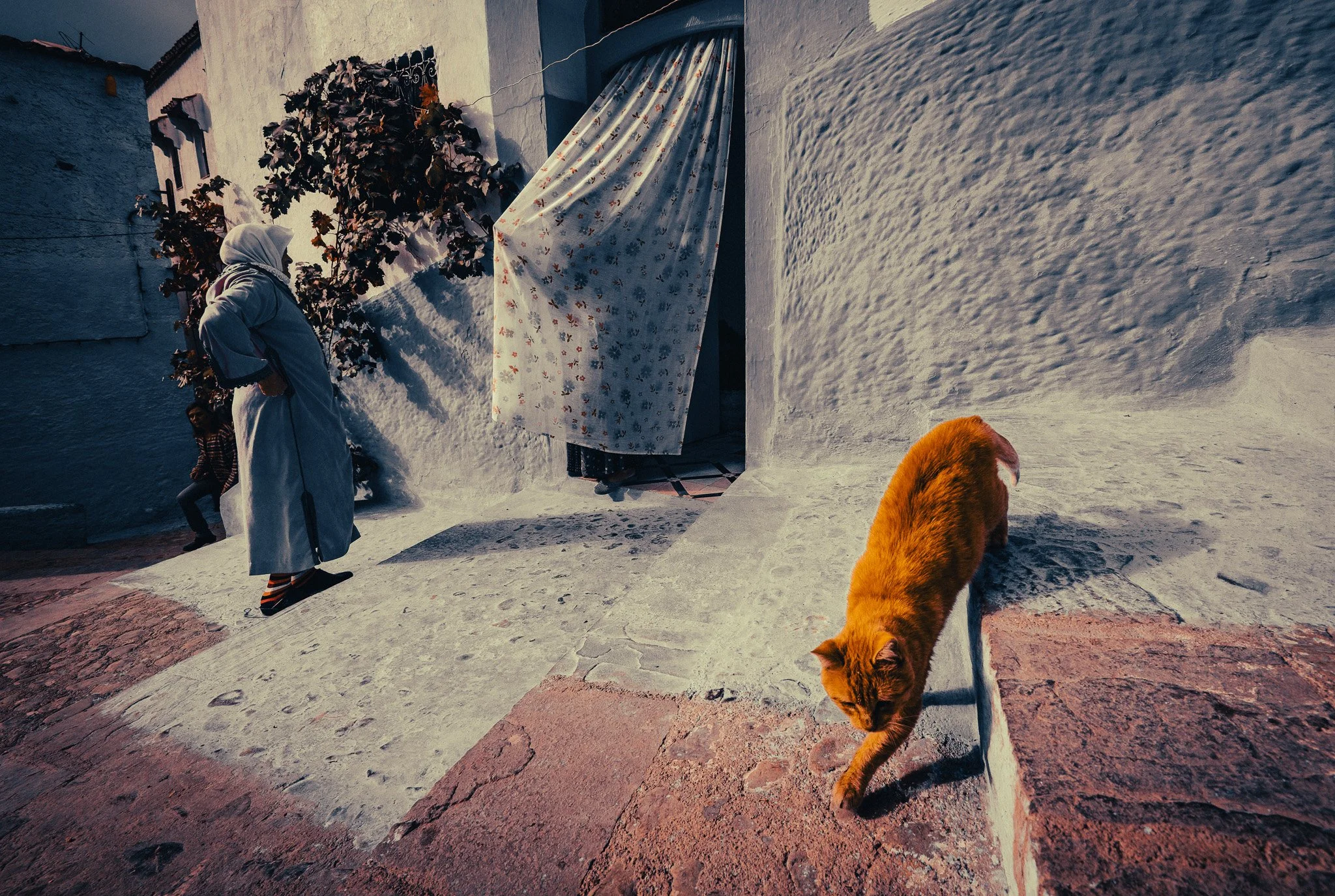
A blue-painted street in Chefchaouen, Morocco, with an orange cat in the foreground and local life unfolding quietly around the doorway.
The route from Tangier to Chefchaouen is one of those journeys that feels simple on paper and completely different in memory. For many travellers, it is a practical question: how do I get from Tangier to Chefchaouen, should I take a bus, rent a car, book a tour, or use a shared taxi? All valid questions.
But for me, this route is childhood. I remember doing it as a child, and I remember the feeling more than the details. The road leaving Tangier, the mountains rising, the sense of moving away from the coast and into another mood of Morocco. Chefchaouen was not just “the blue city” to me then. It was not a Pinterest destination. It was a place we went to, a place wrapped in family memory, mountain air and that deep blue that now belongs to the internet but once belonged only to itself.
Travellers usually visit Chefchaouen because of the blue streets, and yes, they are beautiful. But the journey from Tangier matters too. Northern Morocco has its own rhythm, and the movement between Tangier and Chefchaouen helps you feel it. You leave behind the sea city, with its ferries and wind and restless edges, and move towards the Rif mountains, where everything feels quieter, higher and more enclosed. That contrast is the point. Tangier opens. Chefchaouen gathers.
How to Travel from Tangier to Chefchaouen
You can travel from Tangier to Chefchaouen in a few ways, depending on your budget, confidence and how much inconvenience you are willing to accept as part of the adventure. A rental car gives you freedom, especially if you want to stop along the way or explore northern Morocco at your own pace. It is the easiest option if you do not want to negotiate with transport schedules, strangers or the ancient Moroccan tradition of “it leaves when it leaves.” Freedom, however, costs money.
A bus is usually the more budget-friendly option, you can book it here. It can work well if you are comfortable with public transport and planning around departure times. Shared taxis are another very Moroccan option: not always elegant, not always predictable, but very real. You may find yourself squeezed in with strangers, luggage, heat, conversation and somebody’s opinion about everything from politics to football. Is it glamorous? No. Is it part of the experience? Absolutely.
You can also book an organised day trip or transfer if you want the route handled for you. This is useful if you are short on time, travelling with kids, or simply do not want to use your holiday energy decoding transport. There is no moral superiority in suffering unnecessarily. Sometimes the adventurous option is beautiful. Sometimes the organised option saves your sanity. Choose according to your mood, budget and tolerance for chaos.
Should You Do Chefchaouen as a Day Trip from Tangier?
You can visit Chefchaouen from Tangier as a day trip, but I would only do that if you are short on time. Chefchaouen deserves a slower pace. The blue streets are most atmospheric early in the morning or later in the day, when the light softens and the crowds thin. If you only arrive, walk quickly, take photos and leave, you will see Chefchaouen, but you may not feel it. And honestly, rushing through a mountain town just to prove you went is a very modern form of nonsense.
If you can, stay one night. Let the town change after the day visitors leave. Walk without hunting for the exact famous photo spot. Eat something simple. Sit somewhere with a view. Let the blue stop being a backdrop and become part of the air around you. Chefchaouen is small, but it is not empty. It has its own life beyond the tourist gaze, though tourism has obviously changed it. The trick is to visit gently, without treating every doorway as a personal photoshoot location.
For a northern Morocco itinerary, I would start with Tangier, spend time by the sea, visit Hercules Cave and Cap Spartel, then continue to Chefchaouen for at least one night. That gives the route space to breathe. Morocco is not a country that reveals itself properly when rushed like a checklist with sunburn.
Tangier Ferry to Spain: The Border Feeling
One of the things that makes Tangier so powerful is the ferry connection to Spain. The crossing between Morocco and Spain is more than transport. It is emotional geography. For people from the north, Spain is not abstract. It is there, across the water, close enough to feel and far enough to become a dream, a route, an escape, a return, a weekend, a family story, a border.
Travellers can use Tangier as part of a wider Morocco and Spain route, especially if arriving from or continuing to places like Tarifa, Algeciras or other ferry-connected ports. This is one of the reasons Tangier is such a fascinating entry point into Morocco. You do not arrive into the centre of the country. You arrive at the edge, where the country faces outward.
That border feeling is part of Tangier’s identity. It has always looked across. Across the sea, across languages, across cultures, across histories. For me, that is part of its sadness and beauty. Tangier is home, but it is also departure. Maybe that is why I miss it so much. It holds peace, but also movement. Which is rude, frankly. A place should not be allowed to contain that many feelings.
Morocco Beyond Marrakesh
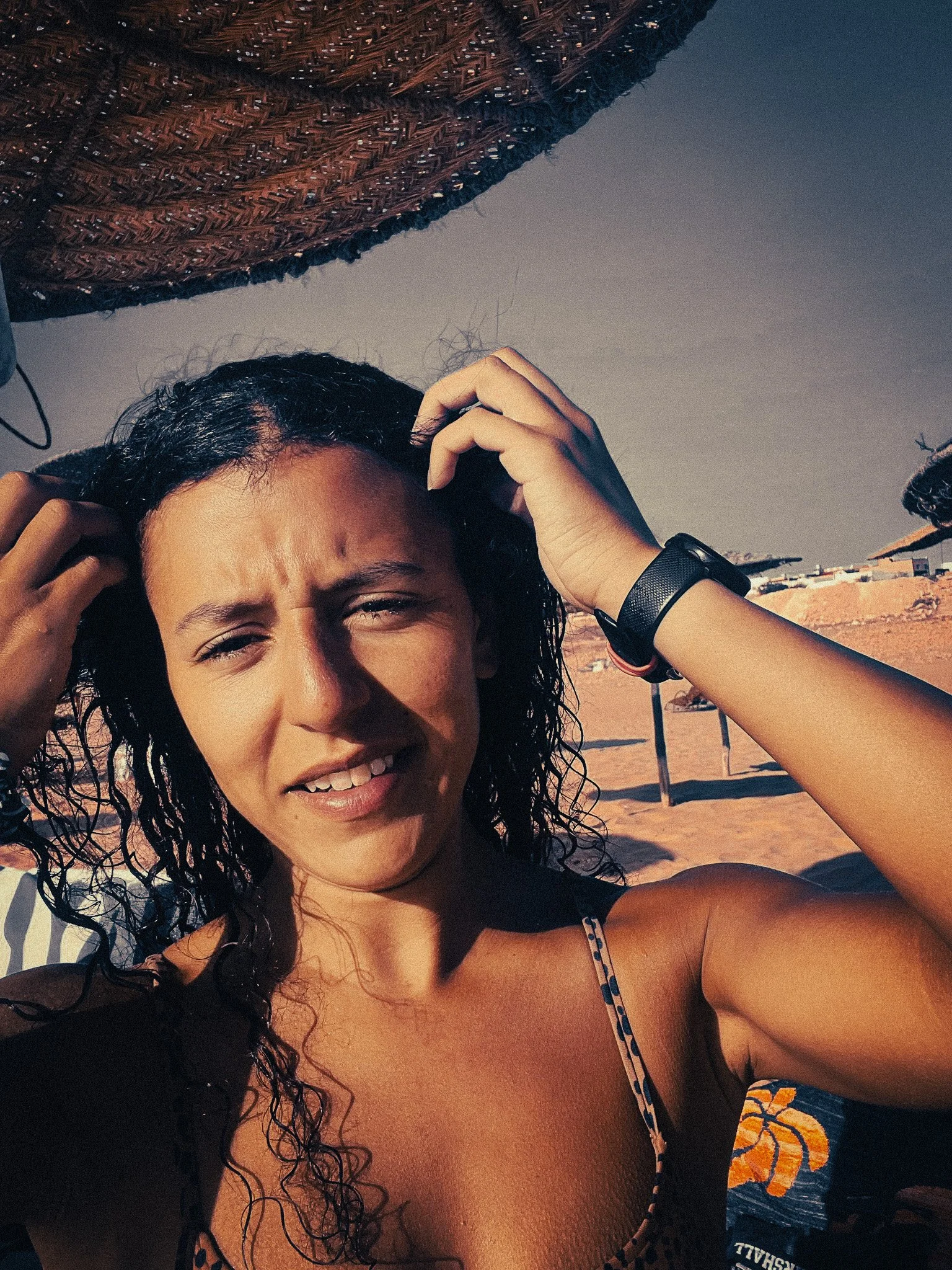
Not every memory is perfectly framed. Some are too bright, too close, too ordinary, and still somehow carry the whole feeling of home.
I understand why people go to Marrakesh. It is famous for a reason. But Morocco is not one city. Morocco is not only red walls, desert tours and rooftop mint tea arranged beside a hat nobody actually wears in real life. Morocco is coastal and mountainous, Atlantic and Mediterranean, Arab and Amazigh, African and European-facing, ancient and restless, tender and completely exhausting when it wants to be.
Tangier and Chefchaouen show a different Morocco. Tangier gives you sea, myth, port energy, ferry routes, old international shadows, childhood nostalgia if you carry it, and a feeling of standing between worlds. Chefchaouen gives you blue streets, mountain air, quiet corners and a slower northern rhythm. Together, they make a route that feels intimate and layered, especially if you are tired of seeing Morocco reduced to the same three places online.
This is the Morocco I want more people to understand. Not because I want it overrun, obviously. Humans do have a gift for loving places until they become souvenir shops. But because Morocco deserves to be seen in its full complexity. The north has a different soul. Tangier especially. It is not always easy, but it is alive in a way that polished places often are not.
Practical Notes for a Tangier to Chefchaouen Trip
A simple northern Morocco route could start with two nights in Tangier, giving you time for the medina, the coast, Cap Spartel, Hercules Cave and the feeling of the city itself. Then continue from Tangier to Chefchaouen and stay at least one night if you can. If you have more time, you can add Tetouan, Asilah or continue south towards Rabat, Fes or Marrakesh. This route works especially well if you are arriving by ferry from Spain or flying into Tangier.
For transport, choose based on your style. Rent a car if you want freedom and comfort. Take the bus if you want to keep costs lower. Use a shared taxi if you want the more local, unpredictable, slightly chaotic version of the journey. Book a transfer or tour if you want things easy. None of these options are wrong. The only wrong option is pretending Morocco will behave exactly like a perfectly timed European itinerary. It will not. Morocco has its own clock, and sometimes that clock is arguing with a taxi driver.
For accommodation, I would stay somewhere central in Tangier if you want to explore without making every outing a transport project. In Chefchaouen, staying inside or near the old town makes sense if you want to walk, photograph, eat and enjoy the atmosphere without constantly climbing in and out of taxis. Always check the map before booking. “Close” in Moroccan hill towns can mean “technically close but your knees may suffer.”
Tangier and Chefchaouen stays for a northern Morocco route
Final Thoughts: The City I Miss
Tangier is not just a stop before Chefchaouen for me. It is home in the strange way a place can be home even when life has pulled you somewhere else. It is the city I miss. The place where I feel peace. The place where the sea seems to remember me better than I remember myself.
Writing about Tangier as travel content feels almost rude, like reducing a person you love to useful bullet points. But maybe that is why this post matters. Tangier is useful for travellers, yes. It is a good base. It has ferries, flights, beaches, caves, myths, cafés and the road to Chefchaouen. But it is also more than that. It is a city of two seas, old legends, childhood routes and quiet ache.
If you are planning Morocco, do not stop at Marrakesh. Go north. Start in Tangier. Stand where the waters meet. Visit Hercules Cave. Take the road to Chefchaouen. Look at Morocco from the edge, not only from the centre.
And if Tangier feels strange to you at first, give it time. Some cities do not open like doors. They open like memories.